
Road-legal e-scooters compared
13 E-scooters from established makers · Selection index 100.8 +0.3% 7 d · avg €586 · as of 18/10/2026
Price table · 13 E-scooters
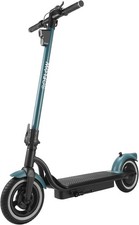 SOF·SO2SoFlow SO2 AIR MAX E-Scooter 500W 80km Reichweite 17,4Ah 10€349+1.2%
 SOF·SO2SOFLOW SO2 Air Max E-Scooter 500W 80 km Reichweite 17,4Ah€350±0.0%
 NAV·ST3NAVEE ST3 Pro E-Scooter mit ABE, Zubehör inklusive€422±0.0%
 SEG·NINEBOTNinebot by Segway KickScooter F20D E Roller mit€299±0.0%
 XIA·ELECTRICXiaomi Electric Scooter 4 Lite€299±0.0%
 NIU·KQI3NIU KQi3 Sport E-Scooter mit Straßenzulassung u. 40km€280±0.0%
 STR·SCOOTERE-Scooter Elektro Roller mit Straßenzulassung "€539±0.0%
 EPO·EPFePF-2 PRO 490 E-Scooter Straßenzulassung 60km Vollfederung€639±0.0%
 XIA·SCOOTERXiaomi Scooter 3. 300W Voll Funktionsfähig Mit€200±0.0%
 NAV·GT3NAVEE GT3 E-Scooter mit Straßenzulassung, TÜV, 50 km€349±0.0%
 EGR·SCOOTERE Scooter + Straßenzulassung | Blinker | 12,5 Zoll | 90 km€999±0.0%
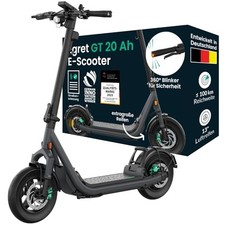 EGR·SCOOTERE Scooter + Straßenzulassung | Blinker | 13 Zoll | Federung€1,899±0.0%
 EGR·SERIEEgret X Serie - Prime, Ultra, Core+, Elektroscooter€999±0.0%
- SOF·SO2SoFlow SO2 AIR MAX E-Scooter 500W 80km Reichweite 17,4Ah 10 Zoll500 W · 80 km€349±0.0%+1.2%+3.3%
- SOF·SO2SOFLOW SO2 Air Max E-Scooter 500W 80 km Reichweite 17,4Ah Straßenzul.500 W · 80 km€350±0.0%±0.0%−2.8%
- NAV·ST3NAVEE ST3 Pro E-Scooter mit ABE, Zubehör inklusiveE-Scooter · ABE (German eKFV)€422±0.0%±0.0%±0.0%24 d
- SEG·NINEBOTNinebot by Segway KickScooter F20D E Roller mit Straßenzulassung250 W · 20 km€299±0.0%±0.0%±0.0%24 d
- XIA·ELECTRICXiaomi Electric Scooter 4 Lite300 W · 25 km€299±0.0%±0.0%+22.5%
- NIU·KQI3NIU KQi3 Sport E-Scooter mit Straßenzulassung u. 40km Reichweite40 km · E-Scooter€280±0.0%±0.0%±0.0%24 d
- STR·SCOOTERE-Scooter Elektro Roller mit Straßenzulassung " Streetbooster One "E-Scooter · ABE (German eKFV)€539±0.0%––
- EPO·EPFePF-2 PRO 490 E-Scooter Straßenzulassung 60km Vollfederung 500W500 W · 60 km€639±0.0%––
- XIA·SCOOTERXiaomi Scooter 3. 300W Voll Funktionsfähig Mit Straßenzulassung300 W · E-Scooter€200±0.0%±0.0%±0.0%11 d
- NAV·GT3NAVEE GT3 E-Scooter mit Straßenzulassung, TÜV, 50 km, Doppelfederungs350 W · 50 km€349±0.0%±0.0%±0.0%24 d
- EGR·SCOOTERE Scooter + Straßenzulassung | Blinker | 12,5 Zoll | 90 km | App90 km · E-Scooter€999±0.0%±0.0%±0.0%21 d
- EGR·SCOOTERE Scooter + Straßenzulassung | Blinker | 13 Zoll | Federung | 100 km100 km · E-Scooter€1,899±0.0%±0.0%±0.0%22 d
- EGR·SERIEEgret X Serie - Prime, Ultra, Core+, Elektroscooter500 W · 90 km€999±0.0%––
Only e-scooters with a general operating permit (ABE) are allowed on German cycle paths and roads. Here you will find models that, according to the seller, are approved under the eKFV regulation – and learn how to check this yourself.
What “road-legal” means for e-scooters
Under German law, e-scooters are classed as small electric vehicles (Elektrokleinstfahrzeuge) and are governed by the Small Electric Vehicles Ordinance (eKFV). To ride on public roads, a scooter needs a general operating permit (Allgemeine Betriebserlaubnis, ABE) or an individual operating permit. The manufacturer documents this with a type plate on the vehicle that shows, among other things, the ABE number. On top of that you need an insurance plate (Versicherungskennzeichen), which you take out with a motor insurer for one year – it is always valid until the end of February.
The eKFV sets technical limits: the design top speed must be between 6 and 20 km/h, continuous rated power may not exceed 500 W, and the scooter must have a handlebar or grab bar. Two independent brakes, lights, side reflectors and a bell are mandatory.
How to spot genuine ABE models
On marketplaces the term “road-legal” (Straßenzulassung) is used rather loosely. So don’t rely on the listing title alone – check the details.
- Top speed of exactly 20 km/h – not 25, 30 or “up to 45”
- ABE number or reference to a German operating permit in the description
- Type plate with manufacturer, type, ABE number and vehicle identification number
- Mount for the insurance plate at the rear
- A model name with “D” or “DE” often indicates the German version
New from 2027: indicators and cycling rules
The eKFV amendment published in February 2026 brings two important changes. First, newly manufactured small electric vehicles must have turn indicators from 2027. Scooters that are already approved are grandfathered and do not need to be retrofitted. Second, from 1 March 2027 the traffic rules will be brought more closely in line with those for cyclists: e-scooters will then be allowed, for example, to use the green filter arrow for cyclists, ride side by side in certain situations and use areas marked with the additional sign “cyclists permitted” (Radverkehr frei).
If you are buying now, you can therefore choose a model with indicators – which is also safer in everyday riding, because you keep both hands on the handlebar when turning.
Common mistakes when buying
The most expensive mistake is a scooter without valid approval. You would be riding without insurance cover – a criminal offence in Germany – and after an accident you are personally liable. Aftermarket tuning chips that remove the 20 km/h limit are just as problematic: they void the operating permit. And finally, many people underestimate the weight. An ABE scooter with a large battery can easily weigh 20 kg or more – bear that in mind if you have to carry it onto the train or up to the fourth floor every day.