
Guide
E-scooters in autumn and winter: ride safely and look after your scooter
Wet leaves, early darkness and cold weather bring new challenges for e-scooter riders. With these tips you will ride safely through the cold season – or store your scooter properly.
Updated 7 min readEditorial team woroller.de
Riding safely in the wet and on leaves
Small wheels and a high centre of gravity make e-scooters sensitive to slippery surfaces. Wet leaves, cobblestones, road markings, drain covers and tram tracks are the biggest hazards in autumn. Ride with foresight, slow down in bends and brake early and evenly – ideally with both brakes at once. Try to cross tracks at a right angle.
In icy conditions, snow and frost, it is better to leave the scooter at home. The small wheels offer hardly any grip, and falls are then almost unavoidable.
Stay visible in the dark season
In autumn you often ride at dusk or in the dark. The mandatory lighting is the bare minimum. Check that your headlight and rear light are clean and correctly adjusted. Reflective clothing, a high-visibility vest or reflective bands on your arms and legs add extra visibility. Scooters with indicators and a brake light make your movements more predictable for others.
- Quickly check the headlight before every ride
- Clean dirt off the reflectors and rear light
- Wear light-coloured clothing or reflectors
- A helmet with integrated light or reflective strips increases visibility
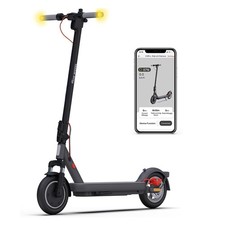
E-scooters with indicators
Ad All products linked with "View offer" are commission (affiliate) links: if you buy through them, we earn a commission – the price stays the same for you. As an Amazon Associate and eBay Partner Network affiliate we earn from qualifying purchases. Learn more
 Ad
AdE-Scooter mit Straßenzulassung 5th Wheel V40 Pro 400W App Lock Blinker bis …
 Ad
AdE-Scooter mit Straßenzulassung Aptum Lite C3 MAX 400W Federung Blinker …
 Ad
Ad5TH WHEEL V40Pro E-Scooter mit ABE Doppelfederung 45km 10 Zoll Blinker 400W
 Ad
AdSoFlow SO4 PRO E-Scooter / E-Roller 10,5 Ah Gen 2 mit Blinker - Neu & OVP
The battery in the cold
Lithium-ion batteries deliver less energy at low temperatures. Range can drop considerably in winter – that is normal and not a defect. So store the scooter in a warm room overnight if possible. After a ride in the cold, let the battery reach room temperature before charging it: charging below about 0 °C can permanently damage the cells.
Plan for more reserve in winter. If your route uses 70 per cent of the battery in summer, it can get tight in winter.
Water and splashes
Most e-scooters are protected against splashing water or water jets to IPX4 or IPX5. They can cope with rain, but not with deep puddles or standing water: water can get into the battery, controller or motor. Don’t ride through puddles of unknown depth, and after a ride in the rain, put the scooter in a sheltered room to dry. Clean it only with a damp cloth, never with a pressure washer.
Road salt attacks screws, the folding joint and brake discs. Wipe the scooter down after riding on salted roads and treat bare metal parts with a little care oil.
Check tyres and brakes
Colder air lowers tyre pressure. Check the pressure of pneumatic tyres more often in autumn, as too little air increases the risk of punctures and rolling resistance. Also check the tread: worn tyres have hardly any grip on wet surfaces. Check your brakes before the season – pads, adjustment and, with disc brakes, the condition of the disc.
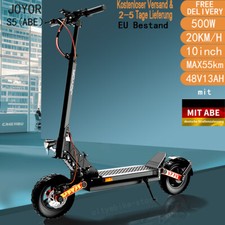
Rugged e-scooters with pneumatic tyres and suspension
Ad All products linked with "View offer" are commission (affiliate) links: if you buy through them, we earn a commission – the price stays the same for you. As an Amazon Associate and eBay Partner Network affiliate we earn from qualifying purchases. Learn more
 Ad−15%
E-Scooter mit Straßenzulassung, 70 km Reichweite, Smart App | 500W Motor …
 Ad
AdOffroad E-Scooter Mit Straßenzulassung ABE 48V Klappbar Elektro Scooter 10 …
 Ad
Ad10 Zoll Elektroroller mit Straßenzulassung 20km/h 48V bis 70KM offroad …
 Ad
AdE-Scooter offroad mit Straßenzulassung 10 Zoll 500W 48V 13Ah JOYOR …
Storing your scooter properly
If you don’t ride in winter, a short routine before the break is worthwhile. That way your scooter will start without problems in spring:
- Clean and dry the scooter thoroughly
- Charge the battery to about 40 to 60 per cent, not full and not empty
- Store dry and frost-free at around 10 to 20 °C
- Check the charge level every four to eight weeks and top up if necessary
- Inflate pneumatic tyres to the recommended pressure
- Check the folding joint and screws, lightly oil moving parts
Don’t forget the insurance plate
The insurance year for e-scooters in Germany always ends on the last day of February. If you want to ride again in spring, you need a new plate in the new colour from 1 March. Many insurers let you take it out online; allow a few days for the plate to be posted. If you use your scooter in winter too, you also need to arrange the changeover in good time.
Autumn as a time to buy
For buyers, autumn is often a good time. Demand falls, retailers clear stock for new model years, and prices often drop. Keep an eye on the price history of the models you are interested in. With the indicator requirement from 2027 in mind, it can make sense to go straight for a model with indicators.
The right clothing
On an e-scooter you hardly move, but the airflow cools you down a lot. A windproof jacket, gloves and a scarf or neck gaiter under your helmet make autumn and winter rides much more pleasant. Gloves should be thin enough for you to operate the brake and throttle safely. Shoes with grippy soles stop you slipping on a wet deck – many decks have a rubber mat that wears over time and should then be replaced.
Make sure scarves and long coats cannot get caught in the wheels or steering.
Keep an eye on the folding joint and screws
Moisture and changes in temperature take their toll on the folding joint. If the stem has play or rattles while riding, the mechanism needs adjusting – on many models via an adjusting screw described in the manual. Also check the screws on the handlebar, deck and axles regularly. A loose handlebar is particularly dangerous in the wet.
The wiring harness deserves a look too: chafed cables running through the folding joint can lead to loose contacts and short circuits. Have any damage repaired by a specialist workshop.
Rental scooters in winter
Many sharing providers reduce their fleets in winter or collect scooters when there is snow and ice. If you rely on rental scooters, check in the app whether vehicles are available and plan alternatives. For safety, the same applies as with your own scooter: in icy conditions, walk or take the bus or train.
Charging indoors – safely
In winter the scooter is usually charged indoors. That is fine if you follow a few rules: charge only with the original charger, not right next to radiators or flammable materials, and ideally while you are at home. A smoke alarm in the room makes sense. If the battery gets unusually hot, smells or the casing deforms, disconnect it from the mains immediately and take it outside, provided this can be done safely.
A damaged battery no longer belongs in the scooter. Have it checked by a specialist workshop and, if in doubt, dispose of it via a retailer or your local recycling centre – never in household waste.
Spring check after the break
Before you start riding again in spring, fully charge the battery, check tyre pressure, brakes, lights and folding joint, and take a short test ride on a quiet route. Remember the new insurance plate from 1 March.
Tyres for wet days
Pneumatic tyres grip better on wet tarmac than honeycomb or solid rubber tyres. If you ride a lot in the rain, a tyre with a slightly chunkier tread is worth considering at your next tyre change. Winter tyres in the car sense don’t exist for most scooters – which makes a careful riding style all the more important.
Conclusion
With an adapted riding style, good visibility and a little care, you will get safely through autumn and winter. In ice and snow, though, the scooter is better left at home – and during the break, the battery will appreciate a warm, dry spot with a half-full charge.
FAQ
Can I ride my e-scooter in winter?
Yes, there is no winter riding ban. However, in snow and black ice, riding on small wheels is dangerous and not recommended.
Why is the range lower in winter?
In the cold, the chemical processes in the battery slow down, so it can deliver less energy. A scooter stored somewhere warm will go further.
Can I charge the battery in sub-zero temperatures?
No. Let the scooter reach room temperature first. Charging at very low temperatures can damage the cells.
How do I store my e-scooter over winter?
Clean, dry and frost-free, with the battery charged to about 40 to 60 per cent. Check the charge level every few weeks.
Is my e-scooter waterproof?
Most models are only splash-proof. Rain is fine, but you should avoid puddles and pressure washers.