
Guide
E-scooters in Germany: road approval, insurance and rules 2026
What rules apply to e-scooters in Germany, and what changes with the eKFV amendment? This guide sums up the most important rules – from the insurance plate to the indicator requirement.
Updated 7 min readEditorial team woroller.de
The basis: the eKFV
E-scooters have been permitted in Germany as small electric vehicles since 2019. The legal basis is the Small Electric Vehicles Ordinance (Elektrokleinstfahrzeuge-Verordnung, eKFV). It defines which vehicles it covers, which technical requirements apply and how you must behave in traffic. A comprehensive amendment to the ordinance was published in February 2026; a first part has applied since April 2026, and the key traffic law changes follow on 1 March 2027.
Small electric vehicles are motor vehicles. That is why some of the rules that apply to them are closer to those for mopeds than for bicycles – such as compulsory insurance and the alcohol limits.
Technical requirements
To count as a small electric vehicle, an e-scooter must meet the following requirements:
- Design top speed between 6 and 20 km/h
- Handlebar or grab bar
- Continuous rated power of no more than 500 W (1400 W for self-balancing vehicles)
- Two independent brakes
- Front and rear lights, side reflectors, a bell with a clear tone
- Maximum dimensions and a weight of no more than 55 kg without rider
- General operating permit (ABE) or individual operating permit
Road-legal e-scooters
Ad All products linked with "View offer" are commission (affiliate) links: if you buy through them, we earn a commission – the price stays the same for you. As an Amazon Associate and eBay Partner Network affiliate we earn from qualifying purchases. Learn more
 Ad−11%
 Ad−43%
 Ad−40%
 Ad
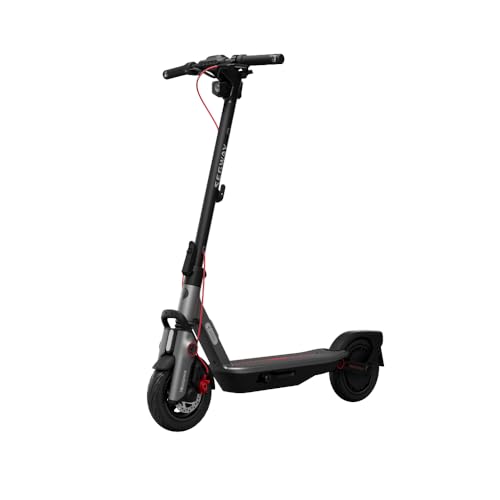
AdSegway-Ninebot E2 Pro D, E-Scooter mit Straßenzulassung für Erwachsene …
Insurance plate: mandatory from the first metre
Every e-scooter used in public traffic requires motor third-party liability insurance, proven by an insurance plate (Versicherungskennzeichen) – a small sticker or metal plate at the rear. The insurance year runs from 1 March to the end of February, and the colour of the plate changes every year. You can take it out with almost any motor insurer, including online. Partial cover against theft is optional.
Riding without a valid insurance plate is a criminal offence under the German Compulsory Insurance Act (Pflichtversicherungsgesetz). In an accident without insurance, you are also personally liable for all damage.
Who may ride? Age, licence, helmet
The minimum age for e-scooters is 14. You don’t need a driving licence or test certificate. There is no legal helmet requirement, but a helmet is highly recommended – falls happen quickly on small wheels, and head injuries are among the most common consequences.
Only one person may ride an e-scooter at a time. Carrying a second person is prohibited and punished with a fine.
Where are you allowed to ride?
E-scooters must use cycle paths, cycle lanes, advisory cycle lanes and cycle streets. If there are none, you ride on the road – both in and outside built-up areas. Pavements and pedestrian zones are off limits unless they are expressly opened to small electric vehicles. One-way streets that are open to cyclists in the opposite direction may currently only be used if this is also signposted for e-scooters.
From 1 March 2027 this becomes simpler: wherever the additional sign “cyclists permitted” (Radverkehr frei) is displayed, e-scooters may ride too. They may also use the green filter arrow for cyclists and ride side by side where nobody is obstructed.
Alcohol: the motor vehicle limits apply
Because e-scooters are motor vehicles, the same blood alcohol limits apply as for cars. From 0.5 per mille you face a fine, a driving ban and penalty points in the central traffic register in Flensburg. From 1.1 per mille you are deemed absolutely unfit to drive – a criminal offence that can also cost you your car driving licence. Even from 0.3 per mille you are committing an offence if you show signs of impairment or cause an accident. For novice drivers on probation and anyone under 21, the limit is 0.0 per mille.
The eKFV amendment: what changes in 2027
The amendment published in February 2026 brings a number of noticeable changes. The key points at a glance:
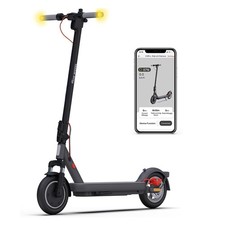
- Indicator requirement for newly manufactured e-scooters from 2027 – existing vehicles are grandfathered
- From 1 March 2027: “cyclists permitted” also applies to e-scooters, additional signs are no longer needed
- From 1 March 2027: the green filter arrow for cyclists may be used
- From 1 March 2027: riding side by side is allowed if traffic is not obstructed
- Higher fines, for example for riding on the pavement
E-scooters with indicators
Ad All products linked with "View offer" are commission (affiliate) links: if you buy through them, we earn a commission – the price stays the same for you. As an Amazon Associate and eBay Partner Network affiliate we earn from qualifying purchases. Learn more
 Ad
AdE-Scooter mit Straßenzulassung 5th Wheel V40 Pro 400W App Lock Blinker bis …
 Ad
AdE-Scooter mit Straßenzulassung Aptum Lite C3 MAX 400W Federung Blinker …
 Ad
Ad5TH WHEEL V40Pro E-Scooter mit ABE Doppelfederung 45km 10 Zoll Blinker 400W
 Ad
AdSoFlow SO4 PRO E-Scooter / E-Roller 10,5 Ah Gen 2 mit Blinker - Neu & OVP
Tuning, parking and taking it with you
Tuning that raises the top speed above 20 km/h voids the operating permit. You would then be riding without approval and without insurance cover – with all the criminal consequences. Modifications such as a retrofitted seat also mean the scooter no longer complies with the eKFV rules.
When parking, the general rules apply: pavements must not be blocked, and many cities have their own rules or designated parking areas, especially for rental scooters. Transport operators decide for themselves whether scooters may be taken on buses and trains – some allow folded scooters, others ban them for fire safety reasons.
Checklist before your first ride
Before you set off on your new e-scooter, go through these points:
- ABE or operating permit and type plate present
- Insurance plate valid and visibly attached
- Lights, brakes and bell working
- Tyre pressure checked, folding mechanism securely locked
- Helmet on – even though it is not compulsory
Foldable commuter scooters
Ad All products linked with "View offer" are commission (affiliate) links: if you buy through them, we earn a commission – the price stays the same for you. As an Amazon Associate and eBay Partner Network affiliate we earn from qualifying purchases. Learn more
 Ad
AdFaltbarer E-Scooter Elektro Scooter bis 120KG APP 20km/h mit …
 Ad
AdE-Scooter Mit Straßenzulassung ABE klappbar Elektroroller bis 40 KM …
 Ad
AdNinebot by Segway E2 PRO D Elektro-Roller Kickscooter E-Scooter Faltbar
 Ad
AdSoFlow SO2 AIR MAX E-Scooter 500W 80km Reichweite 17,4Ah 10 Zoll Faltbar …
Fines at a glance
Many e-scooter offences are penalised in a similar way to those for cyclists or Mofa riders. The most common include riding on the pavement, riding two-up, using a smartphone while riding and running red lights. Holding a phone on the handlebar or typing while riding is prohibited, just as in a car, and can be punished with a fine and a penalty point in Flensburg.
With the eKFV amendment, some fines are going up, particularly for illegally riding on pavements and for carrying passengers. You can find the exact amounts in the current German catalogue of fines (Bußgeldkatalog). Anyone caught without an insurance plate, with a tuned scooter or under the influence of alcohol, on the other hand, risks not just fines but criminal proceedings and possibly their driving licence – including the one for the car.
Rental scooters: what is different
With rental scooters from city sharing schemes, the provider takes care of approval and insurance. The traffic rules apply all the same, though: minimum age 14, one person per scooter, cycle path instead of pavement, alcohol limits as for cars. Many cities also have designated parking zones or parking bans for rental scooters. If you park a scooter incorrectly, you usually pay a fee to the provider; you may also be liable for damage caused by scooters that fall over.
Accident – what to do?
After an accident, the same applies as in all other road traffic: secure the scene, give first aid, call the emergency services if anyone is injured and exchange details. Because e-scooters are motor vehicles, the motor liability insurance linked to your insurance plate covers damage you cause to others. It does not cover your own injuries; for those, private accident insurance or – on the way to work – statutory accident insurance can help. Take photos of the scene and note down witnesses, as this makes it easier to clarify what happened.
Leaving the scene of an accident is a criminal offence on an e-scooter too. If you scrape a parked car, you must wait for a reasonable time or inform the police.
Common misconceptions
A widespread misconception is that the rules for bicycles apply to e-scooters. That is only partly true: for where you may ride, the eKFV follows the rules for cyclists, but for insurance and alcohol it follows those for motor vehicles. It is just as wrong to assume that a 25 km/h scooter is “almost legal” – any speed above the 20 km/h limit means it no longer counts as a small electric vehicle. And a scooter approved abroad is not automatically allowed in Germany either: what counts is a German operating permit.
In short
ABE, insurance plate, age 14 and up, cycle path instead of pavement, 20 km/h and zero tolerance for tuning – keep to these and you are on the safe side.
FAQ
Do I need insurance for an e-scooter?
Yes. Every e-scooter used in public traffic needs motor third-party liability insurance with an insurance plate.
From what age can you ride an e-scooter?
From 14. A driving licence is not required.
What is the alcohol limit on an e-scooter?
The same as for cars: 0.5 per mille is an administrative offence, 1.1 per mille or more a criminal offence, and 0.0 per mille for novice drivers and under-21s.
Can I ride my e-scooter on the pavement?
No, unless the pavement is expressly opened to small electric vehicles. Fines for this are rising with the eKFV amendment.
Will my e-scooter need indicators from 2027?
Only newly manufactured scooters. Vehicles that are already approved are grandfathered.